From fast capture to structured reviews and MT5 connectivity, BetterTrade is built to keep your
journal useful after the trade is over.
📓
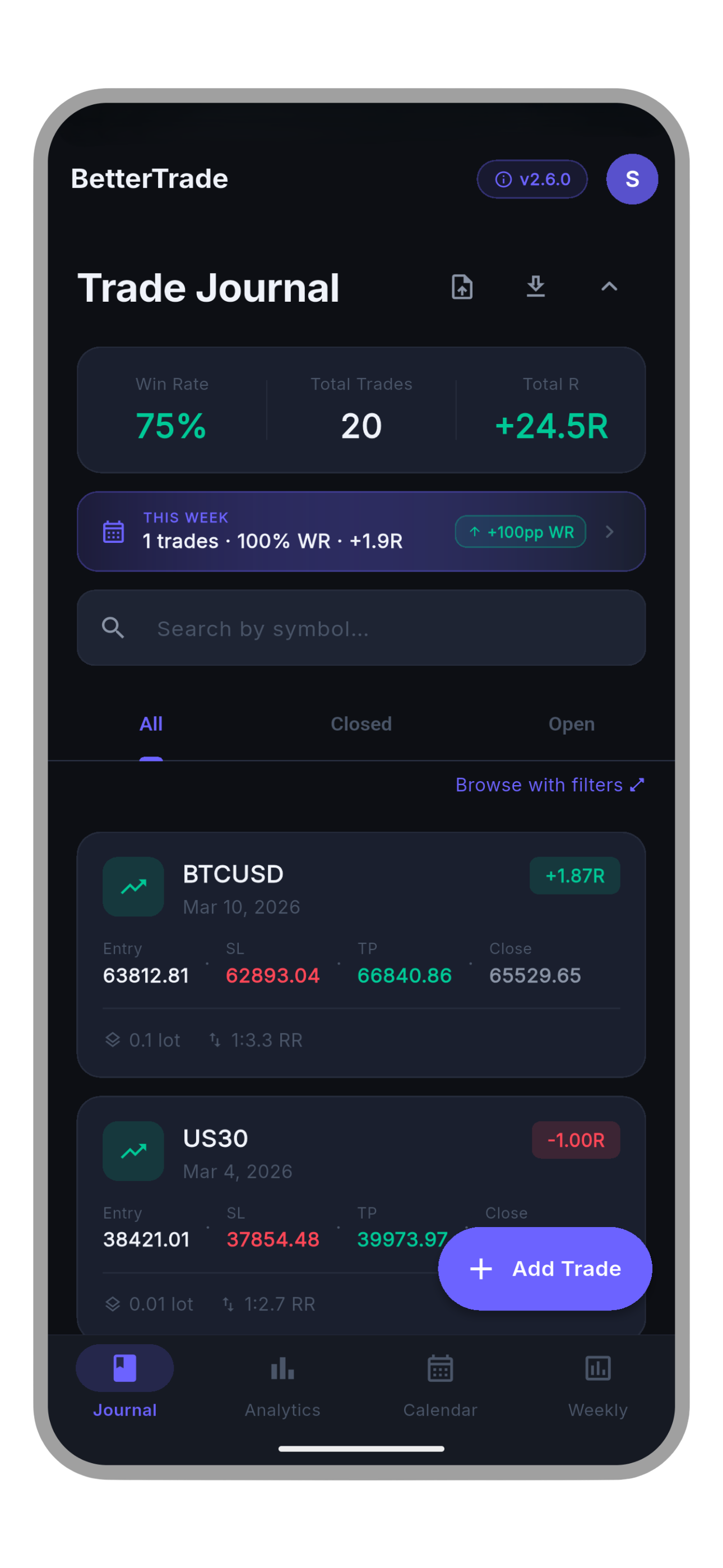
Trade Journal
Log symbol, direction, entry, SL, TP, lot size, session, notes, screenshots, behavior tags, and
pre-trade plan context with sync across devices and offline-friendly local cache.
Free
⚡
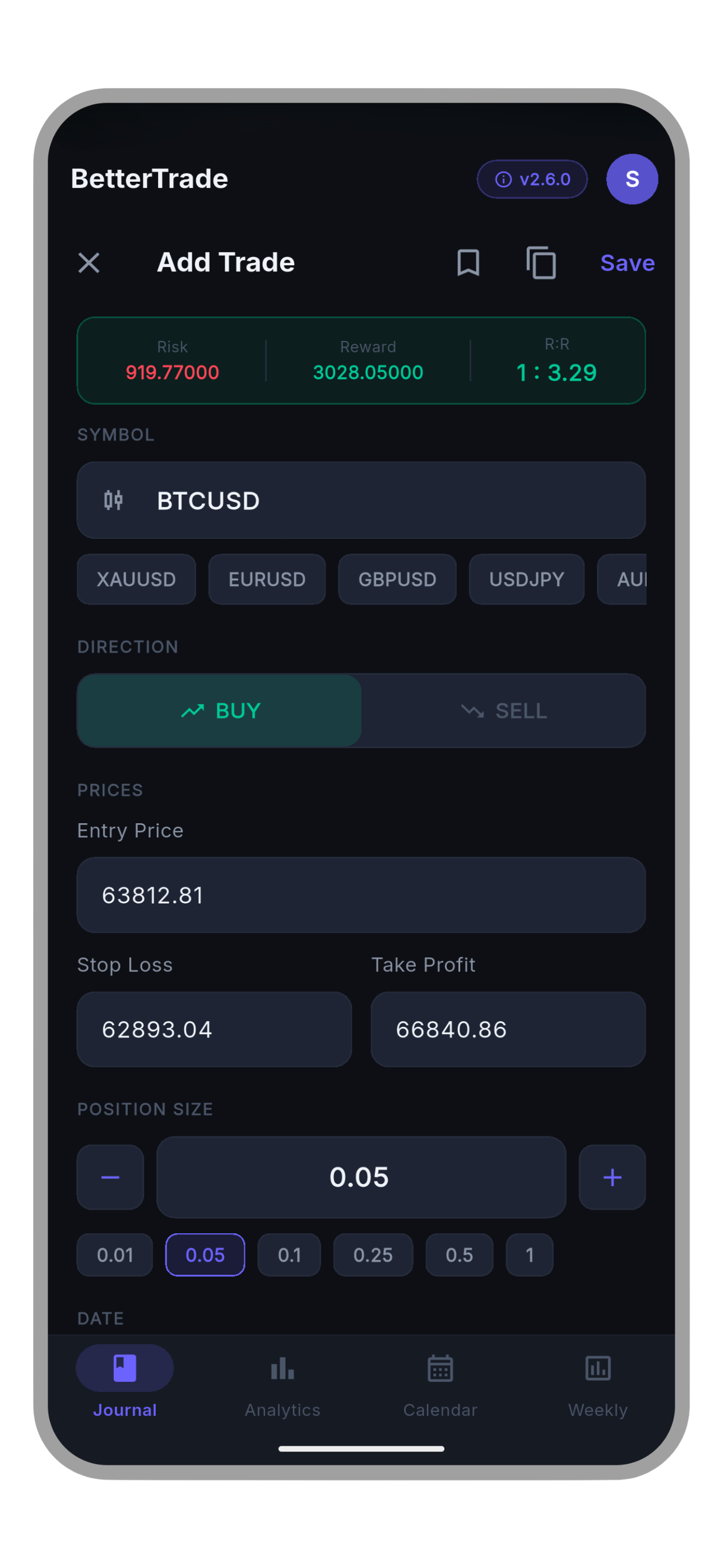
Fast Entry
Auto R:R calculation, duplicate last trade, lot presets, trade templates, custom tags, and symbol
memory. Recent updates now restore the full form snapshot when you reuse templates or duplicate a
trade.
Free
📝
Trade Reviews
A dedicated review workspace keeps pending and completed reviews separate from the main journal
so you can close the loop on each finished trade without losing focus.
Free
🎯
Daily Journal and Weekly Report
Pre-session planning, post-session reflection, mood check-ins, focus rules, and an automated
weekly summary keep your trading process visible between trades.
Free
📅
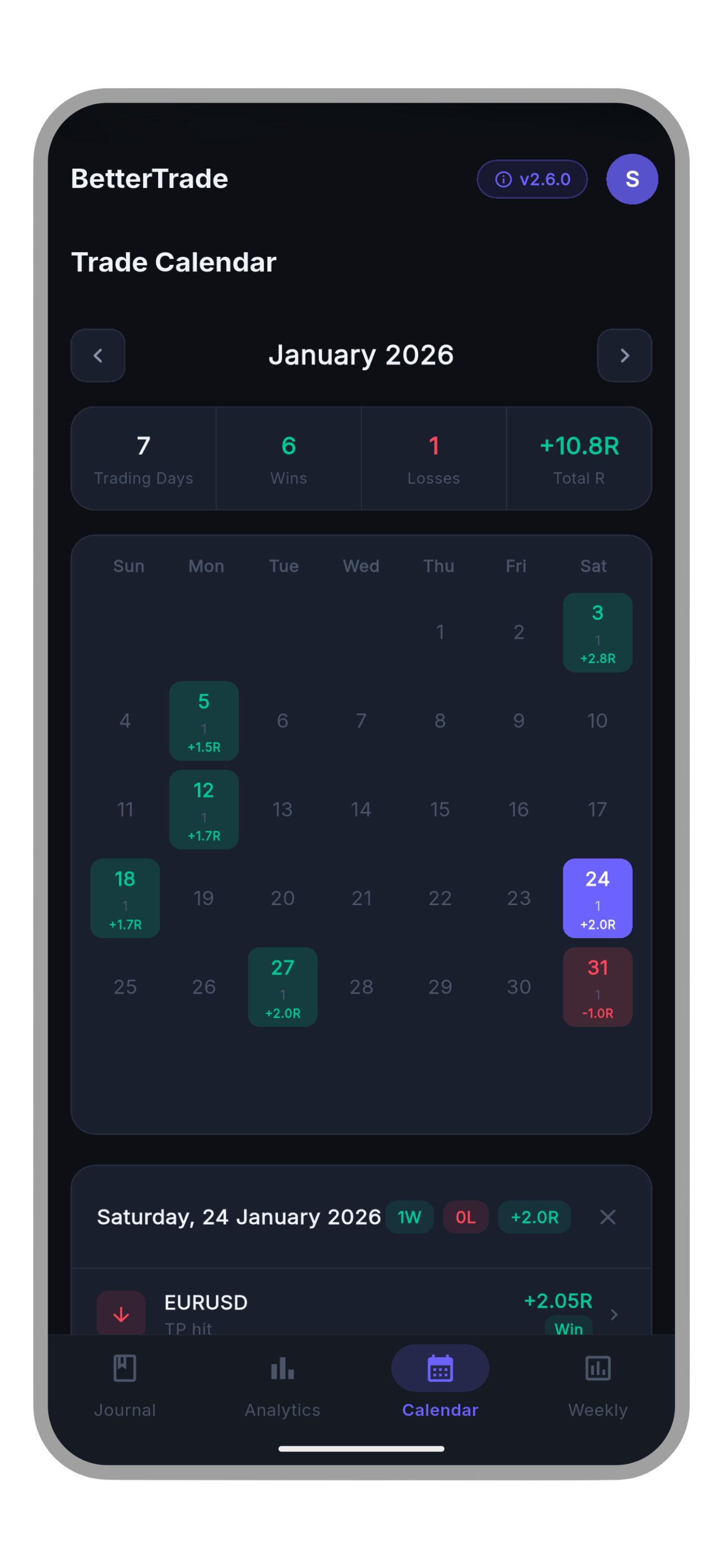
Trade Calendar
Month-view with per-day P&L colour coding - green profit days, red loss days, yellow
breakeven. Tap any day for a full breakdown.
Free
📤
Import and Export
Import from MetaTrader 5 HTML or CSV, generic CSV, or BetterTrade exports with duplicate-safe
fingerprints. Export your journal as JSON or CSV and share it directly from the app.
Free
🔁
MT5 Auto Sync
Pair BetterTrade with MetaTrader 5 using one generated API key, a guided setup screen, and the
compiled BetterTrade MT5 Expert Advisor for automatic closed-trade sync and remote alerts.
Free
🔔
Notifications That Match the Workflow
Daily Check-In, Streak Protection, and Weekly Review reminders now line up with pending review
work and journaling habits instead of blunt trade-count nudges.
Free
📊
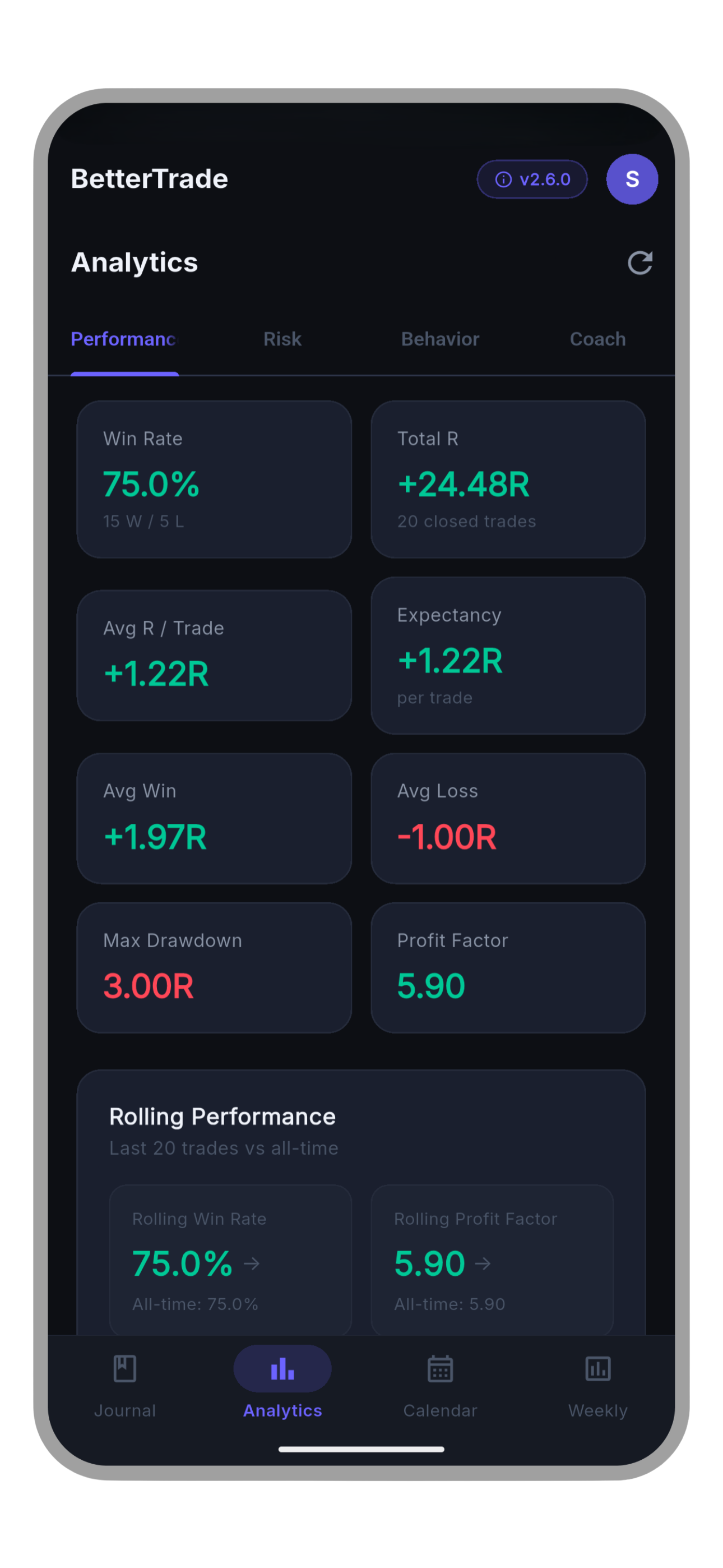
Performance Analytics
Performance, Risk, Behavior, and Insights views cover expectancy, drawdown, risk of ruin,
streaks, playbooks, market conditions, checklist impact, and mistake cost.
Pro
🔍
Smart Insight Engine
BetterTrade currently ships with 12 built-in insight rules that rank issues such as revenge
trading, risk drift, session weakness, and behavior cost so you know what deserves attention
first.
Pro
🏆
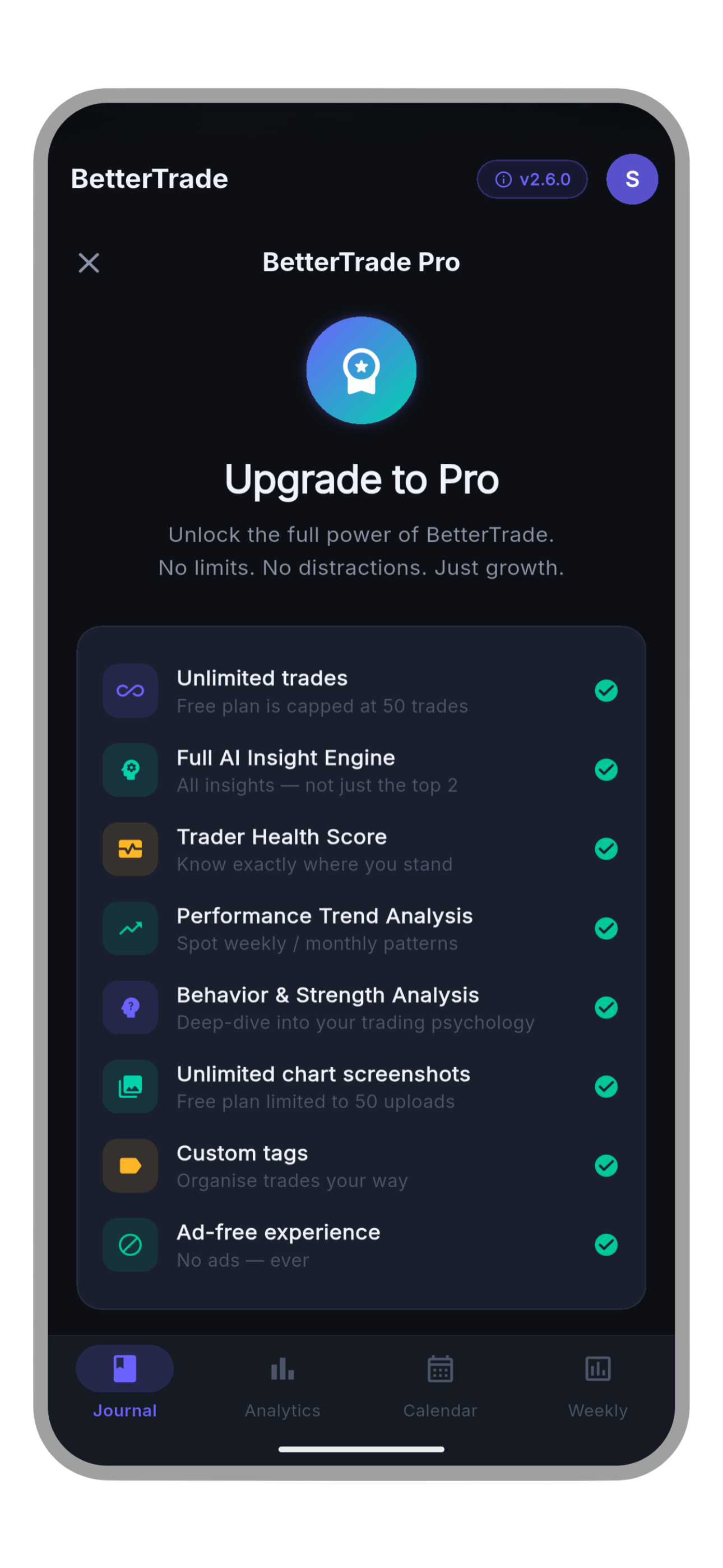
Trader Health Score
100-point score across Win Rate (25), Expectancy (30), Risk Control (25), and Discipline (20).
Five tiers: Beginner to Elite. Updates with every trade.
Pro
🧭
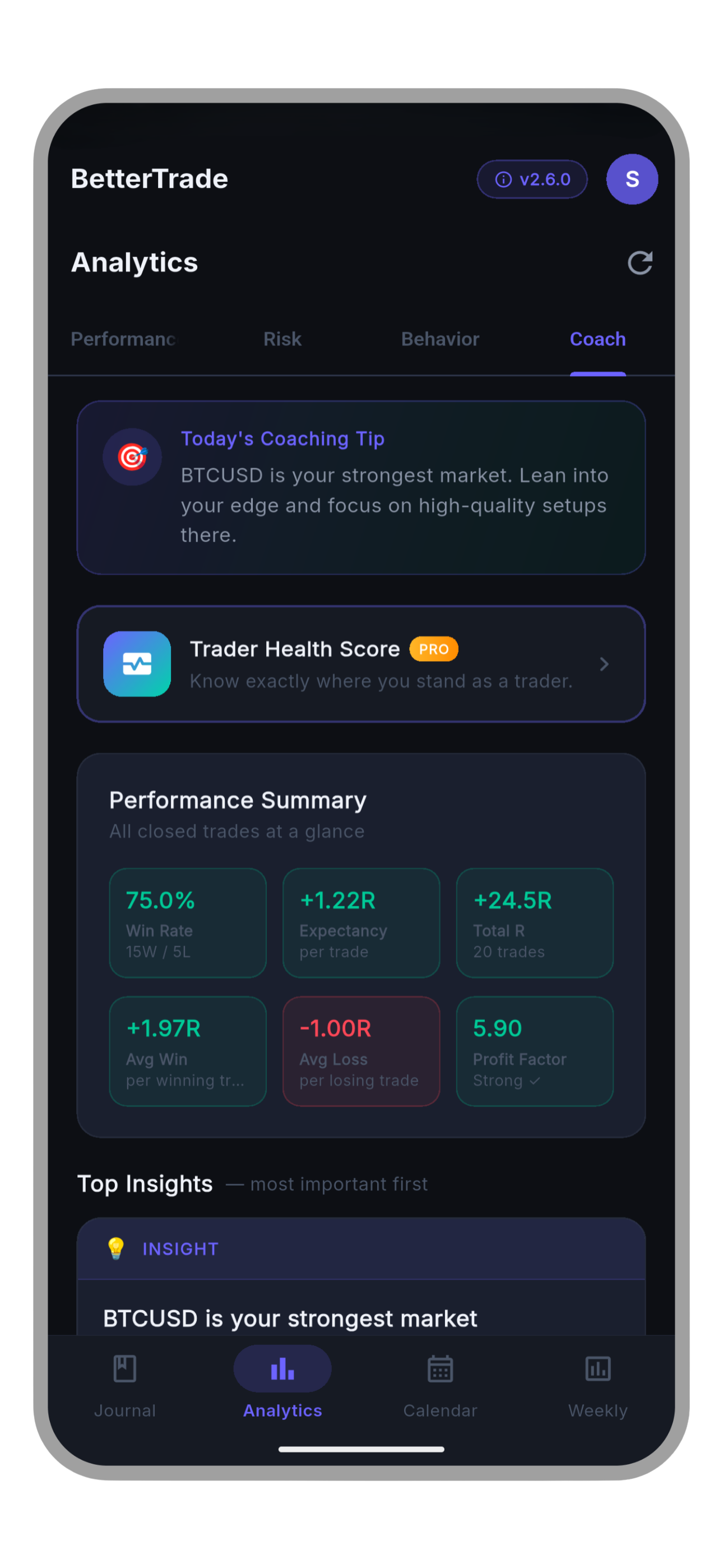
Coach Dashboard
Coach focus loops, strengths versus issues, behavior-impact breakdowns, trend analysis, and
follow-through cues help you stay honest about what to keep and what to change next.
Pro